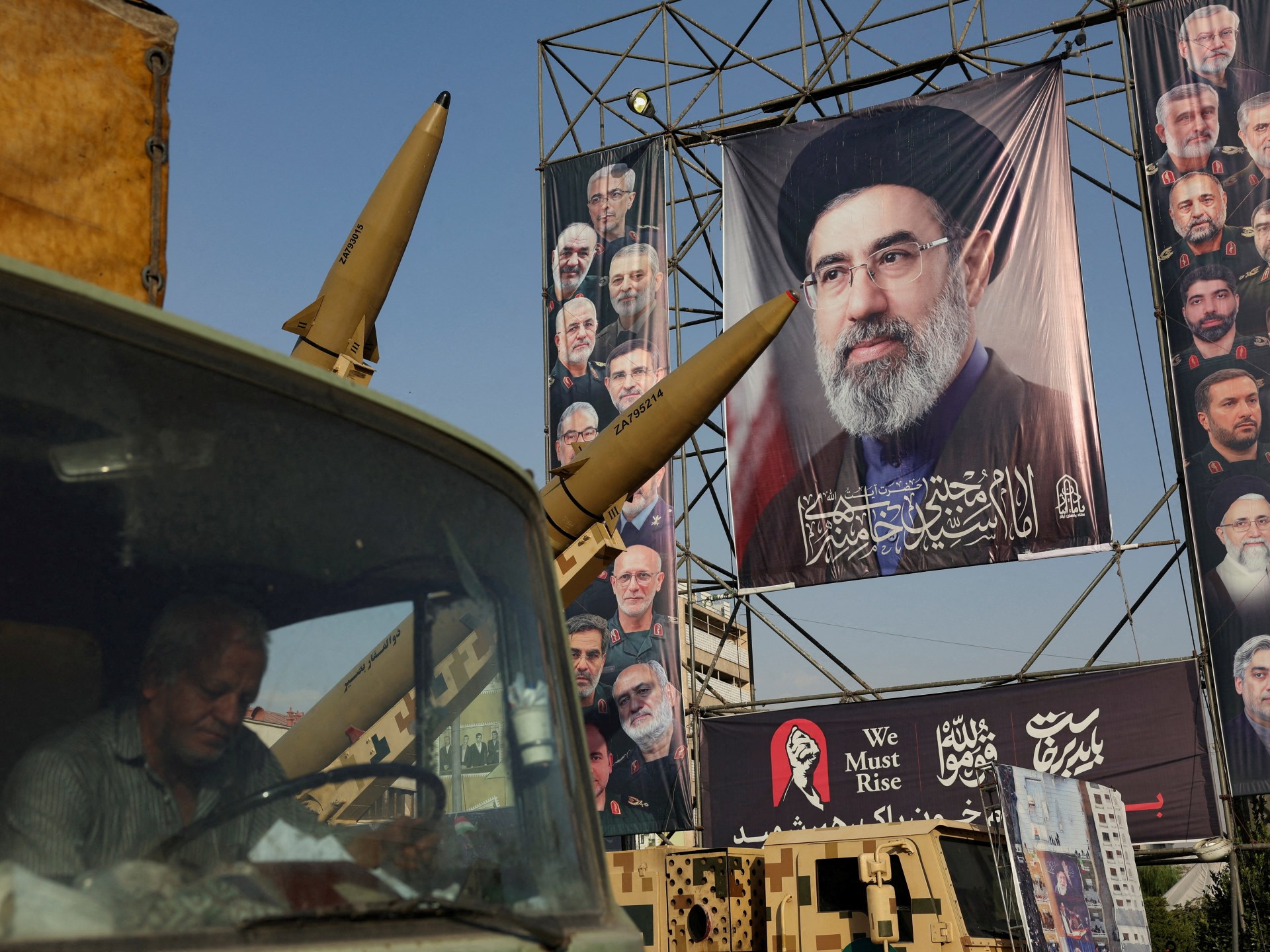
Iran's Islamic Revolutionary Guard Corps (IRGC) has announced the removal of a self-imposed 2,000km limit on the range of its ballistic missiles, potentially expanding their reach beyond the Middle East. During a press conference in Tehran, IRGC spokesman Brigadier-General Hossein Mohebbi confirmed the decision, without specifying if Iran already possesses missiles exceeding this range. The announcement follows Supreme Leader Mojtaba Khamenei's recent warning of an unlimited response to threats from the United States or Israel. Iranian officials have expressed a need to address the volatile situation in the Strait of Hormuz and the US naval blockade on Iranian ports, as well as intensifying diplomatic efforts to end the US-Israeli conflict. The move could enable Iran to position some rocket launchers in its eastern territory, potentially reaching Israel with a larger range. Gulf states, already within Iran's 2,000km range and subjected to repeated missile attacks since February, are unlikely to see significant changes. However, the US and its European allies fear that Iran could target their bases in the Indian Ocean and Europe, with concerns raised over potential threats to US bases in the Indian Ocean and a reported UK accusation of Iranian missile fire towards the joint US-UK base at Diego Garcia. Experts suggest Iran may have the capability to field missiles with a range of about 5,000km, potentially threatening most of Europe and North Africa. The decision appears to signal a shift in Tehran's assurances to Europe regarding missile range, as diplomatic relations between Iran and Europe have deteriorated over nuclear program concerns and regional geopolitical ambitions. Iran has expressed displeasure towards the European Union's designation of the IRGC as a "terrorist" group and its allowing US access to European bases. Tensions escalated further when Iran warned Bulgaria against hosting US military aircraft, leading to Bulgaria's approval of hosting up to eight US KC-135 refuelling tankers at Bezmer airbase in July, resulting in further Iranian warnings to Sofia.
The Islamic Revolutionary Guard Corps (IRGC) of Iran has declared the abolishment of a self-imposed limit on the range of its ballistic missiles, which could potentially expand their reach beyond Middle Eastern targets. Brigadier-General Hossein Mohebbi, IRGC spokesman, made the announcement during a press conference in Tehran, though he did not reveal whether Iran already possesses missiles capable of exceeding the 2,000km range. The decision follows Supreme Leader Mojtaba Khamenei's warning that Iran would respond to threats from the United States or Israel without geographical limitations. Tensions in the Strait of Hormuz and the US naval blockade on Iranian ports have been a significant factor driving this shift towards an "offensive" military doctrine for Iran. The move may allow Iran to reposition some rocket launchers in its eastern territory, potentially enabling them to reach Israel with a larger range. Gulf states, already within Iran's existing 2,000km range and subjected to repeated missile attacks since February, are unlikely to see significant changes. However, the United States and European allies worry that Iran could target their bases in the Indian Ocean and Europe, with allegations of Iranian missile fire towards the joint US-UK base at Diego Garcia reported. Experts speculate that Iran may have the capacity to field missiles with a range of approximately 5,000km, potentially threatening most of Europe and North Africa. The removal of the range limit appears to represent a change in Tehran's assurances to Europe regarding ballistic missile capabilities, as relations between Iran and Europe have deteriorated over nuclear program concerns and regional geopolitical ambitions. The European Union has designated the IRGC as a "terrorist" group, and tensions escalated further when Iran warned Bulgaria against hosting US military aircraft, leading to Bulgaria's approval of hosting up to eight US KC-135 refuelling tankers at Bezmer airbase in July.
The Islamic Revolutionary Guard Corps (IRGC) of Iran has announced the removal of a self-imposed limit on the range of its ballistic missiles, potentially expanding their reach beyond Middle Eastern targets. Brigadier-General Hossein Mohebbi, IRGC spokesman, made the announcement during a press conference in Tehran, though he did not specify whether Iran already possesses missiles capable of exceeding the 2,000km range. The decision follows Supreme Leader Mojtaba Khamenei's warning that Iran would respond to threats from the United States or Israel without geographical limitations. Tensions in the Strait of Hormuz and the US naval blockade on Iranian ports have been a significant factor driving this shift towards an "offensive" military doctrine for Iran. The move may allow Iran to reposition some rocket launchers in its eastern territory, potentially enabling them to reach Israel with a larger range. Gulf states, already within Iran's existing 2,000km range and subjected to repeated missile attacks since February, are unlikely to see significant changes. However, the United States and European allies worry that Iran could target their bases in the Indian Ocean and Europe, with allegations of Iranian missile fire towards the joint US-UK base at Diego Garcia reported. Experts speculate that Iran may have the capacity to field missiles with a range of approximately 5,000km, potentially threatening most of Europe and North Africa. The removal of the range limit appears to represent a change in Tehran's assurances to Europe regarding ballistic missile capabilities, as relations between Iran and Europe have deteriorated over nuclear program concerns and regional geopolitical ambitions. The European Union has designated the IRGC as a "terrorist" group, and tensions escalated further when Iran warned Bulgaria against hosting US military aircraft, leading to Bulgaria's approval of hosting up to eight US KC-135 refuelling tankers at Bezmer airbase in July. The diplomatic push to end the US-Israeli conflict on Iran has intensified, with Trump stating there is "positive momentum" towards ending military hostilities after talks with Qatari Prime Minister Sheikh Mohammed bin Abdulrahman bin Jassim Al Thani in Washington, DC.