Unprecedented Wildfires Ravage Indonesia, Closing Mount Bromo National Park and Deploying Thousands of Firefighters
A massive wildfire outbreak has engulfed various regions across Indonesia, prompting an unprecedented deployment of over 49,000 firefighters and disaster personnel backed by numerous helicopters.
By Global Focus Wire Desk
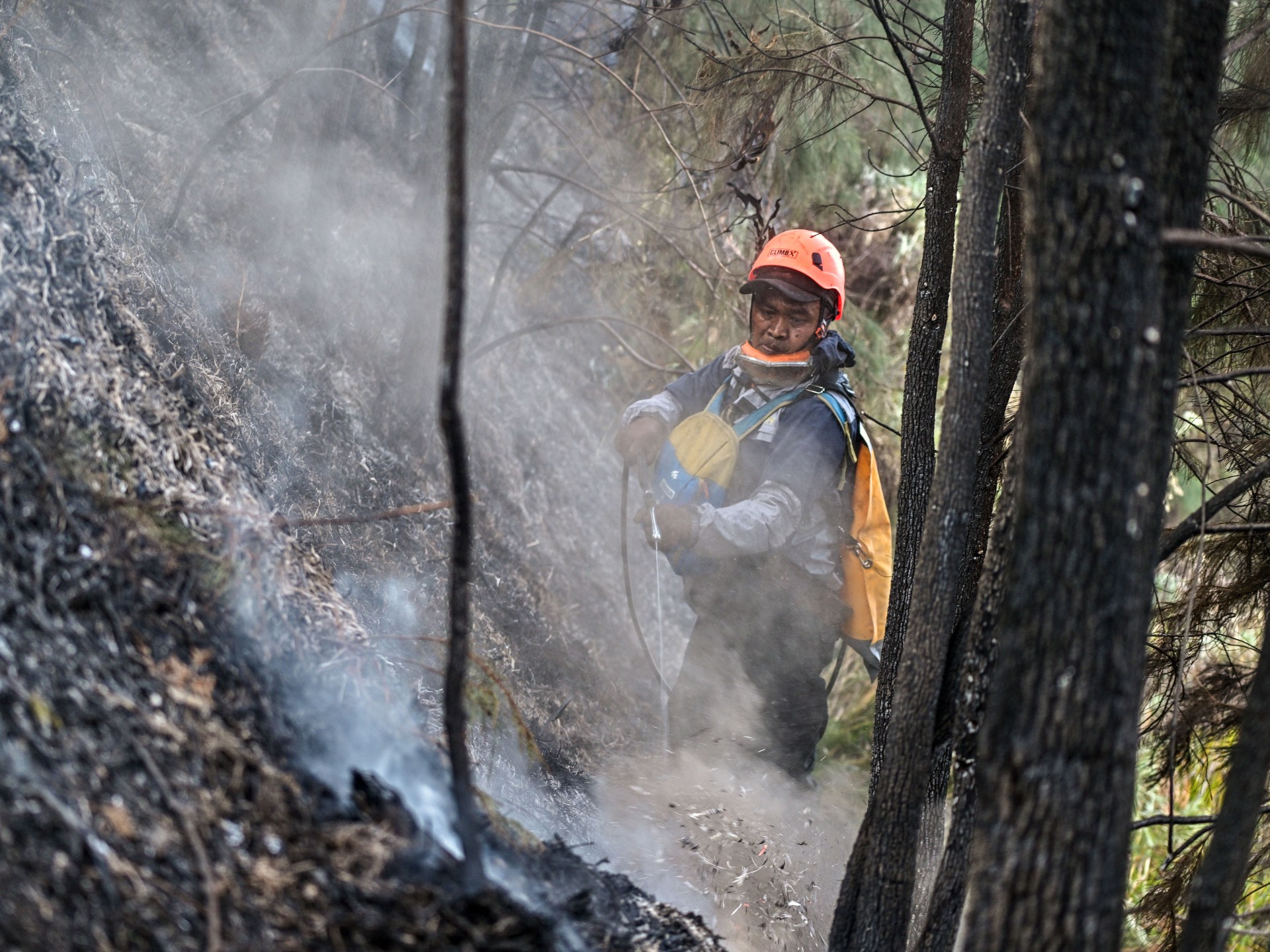
A massive wildfire outbreak has engulfed various regions across Indonesia, prompting an unprecedented deployment of over 49,000 firefighters and disaster personnel backed by numerous helicopters. The fires have been attributed to El Nino-induced dry conditions that have heightened the risk of forest and land blazes during the peak dry season. The largest fire has erupted in Bromo Tengger Semeru National Park, where approximately 743 hectares (1,836 acres) have been scorched, causing the park to be temporarily closed for visitor safety. The flames have consumed expanses of dry grassland, vegetation, and protected Edelweiss flowers, with the Penanjakan area, a popular tourist site, also affected. Meanwhile, around 6,000 firefighters have been dispatched to battle wildfires in Jambi province, where difficult access, limited water supplies, strong winds, and deep peat soil have complicated firefighting efforts despite the assistance of three firefighting helicopters. The Indonesian forestry ministry predicts an intensified and prolonged dry season for 2026, with higher risks of wildfires and drought due to El Nino. In response, weather-modification or cloud-seeding operations have been considered a potential solution, but government minister Djamari Chaniago reported that unfavourable weather conditions have made such efforts impractical. With cloud-seeding ruled out, the focus has shifted to water bombing and ground firefighting teams. Authorities have also warned against activities that could ignite new fires, such as discarding cigarette butts or clearing land by burning. Wildfires have been reported in several fire-prone regions across Indonesia, including Sumatra island and Borneo island, necessitating the deployment of over 48,000 additional firefighters and disaster personnel.
Filed underWorld
More stories
World
Ancestral Naga Skulls Returned to Nagaland by Oxford Museum for a Joint Memorial and Burial
— Global Focus Wire Desk
World
Stranded Round-the-World Cruise Ship Seized in Singapore after Operator's Financial Collapse
— Global Focus Wire Desk
World
US, Russia, and Ukraine Hold Talks in Abu Dhabi to End War in Ukraine
— Global Focus Wire Desk
World
European Diplomats Advocate for Involvement in Russia-Ukraine Negotiations at G7 Meeting
— Global Focus Wire Desk
World
Global Energy Tussle: US-China Rivalry and Its Impact on Household Bills Worldwide
— Global Focus Wire Desk
World
Honduran Court Delays Verdict in Sex-Trafficking Case Linked to Angie Pena's Disappearance
— Global Focus Wire Desk