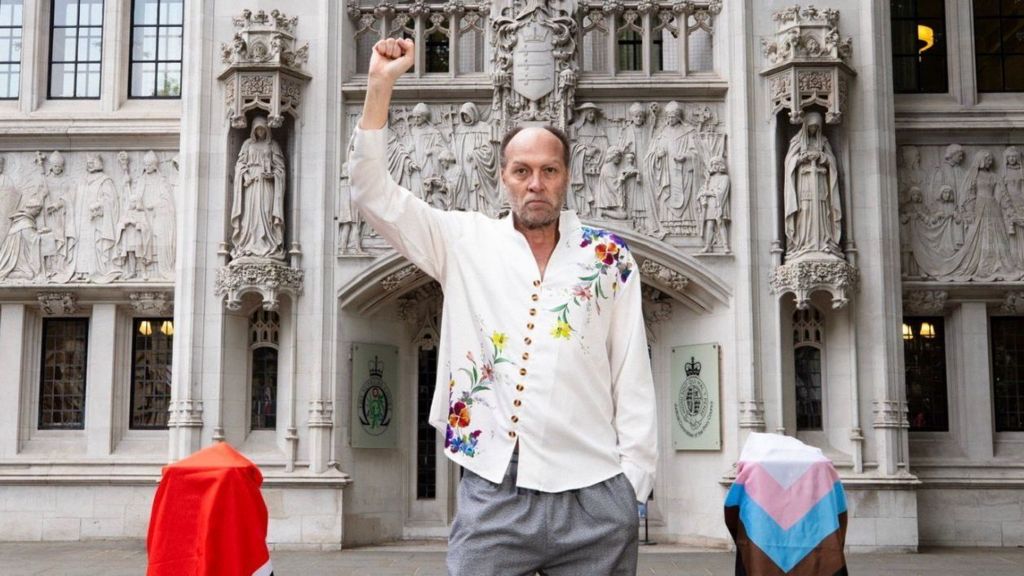
In a significant ruling, London's Judicial Committee of the Privy Council (JCPC) has declared unconstitutional the laws criminalizing same-sex intimacy in Trinidad and Tobago. This decision marks an end to an 11-year legal battle led by dual-citizen Jason Jones, aged 62, who had contended that these laws violated his right to privacy. The judgement is a precedent-setting move as it represents the first time the JCPC has decided on a case aimed at decriminalizing same-sex intimacy. Prior to this ruling, Trinidad and Tobago was among some 34 Commonwealth countries that continued to criminalize homosexuality based on colonial-era British laws. These laws imposed imprisonment as punishment for consensual same-sex intimacy, and in certain cases, carried the death penalty.
The Attorney General of Trinidad and Tobago had argued that the law was protected from legal challenges by "savings law clauses," which carried over existing British laws into newly independent states. However, Jones' representatives countered that these laws infringed upon an individual's right to privacy and claimed that modifications made to the laws in 1986, resulting in stricter punishments, rendered the savings clause protections invalid. The judicial committee unanimously ruled in favor of Jones, stating that the laws "cannot be regarded as reasonably justifiable in a society that has a proper respect for the rights and freedoms of an individual."
Jones expressed his hope that this ruling would "accelerate the fight for full equality" and asserted that these laws never truly reflected Trinidad and Tobago's diverse, multiracial, and secular society. Lawyer Anand Ramlogan SC, representing Jones, described the judgement as a "landmark victory for gay rights, equal dignity, and respect for private and family life in Trinidad and Tobago." The ruling is expected to inspire similar successful legal challenges elsewhere within the Commonwealth.