Trilateral Defense Pact Among Saudi Arabia, Pakistan, and Turkey: A Shield of Peace or Strategic Signal?
In a symbolic gesture, leaders from Saudi Arabia, Pakistan, and Turkey signed the Makkah Joint Defense Agreement on Friday at al-Safa Palace in Mecca.
By Global Focus Wire Desk
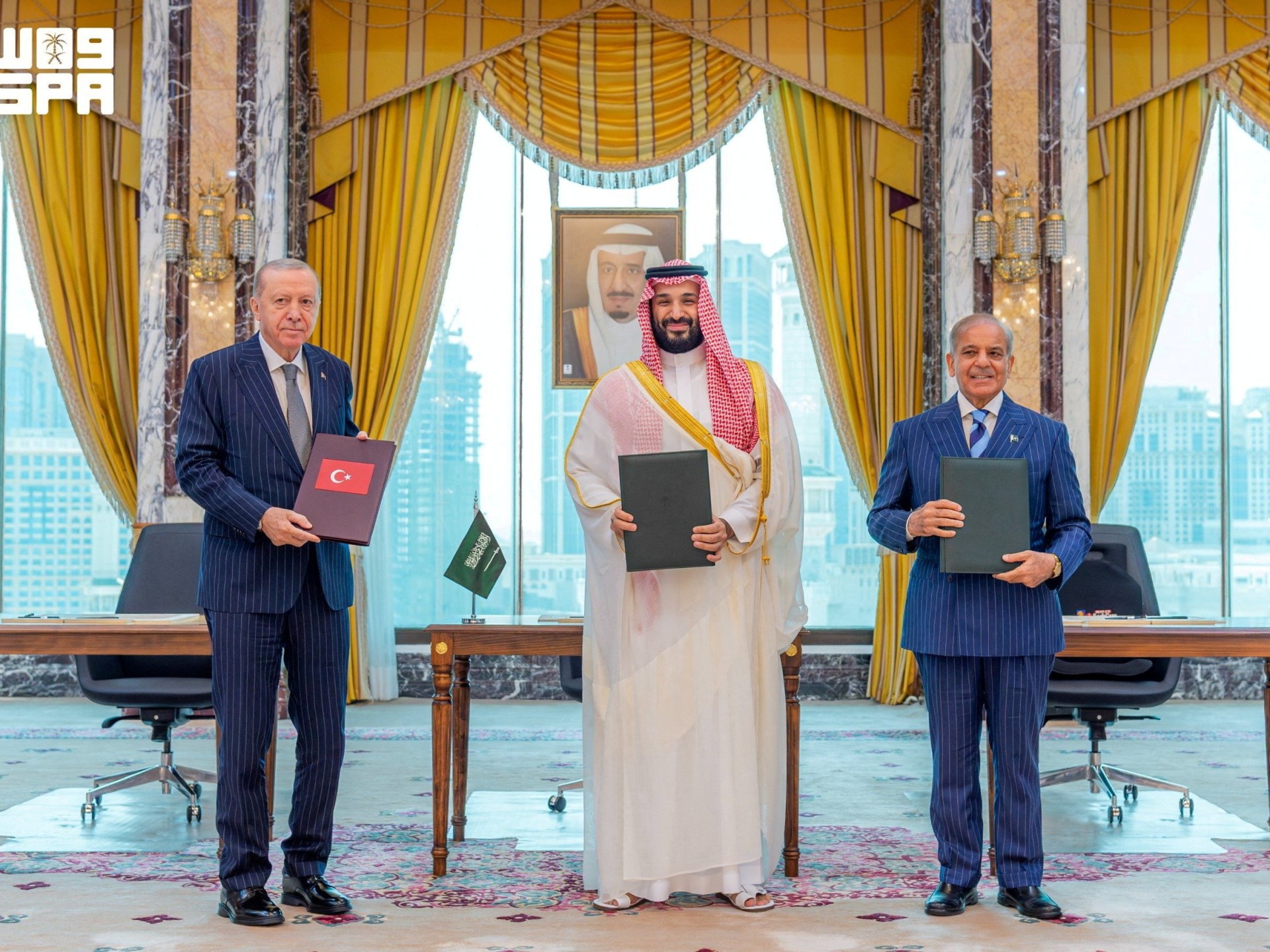
In a symbolic gesture, leaders from Saudi Arabia, Pakistan, and Turkey signed the Makkah Joint Defense Agreement on Friday at al-Safa Palace in Mecca. The pact, which expands upon an existing bilateral agreement between Saudi Arabia and Pakistan, treats an attack on any one of the three countries as an attack on all three. The agreement, however, does not specify a particular threat, though analysts suggest Iran and its regional network are central to the thinking behind it. The agreement was signed five months into the U.S.-Israel conflict with Iran, which has escalated tensions in the region. Saudi officials emphasized that the pact is not a threat to regional security or a compromise of their ties with other allies, including the U.S. and Gulf countries. While the practical implications are minimal at this stage, the agreement is seen as a strategic signal rather than an operational alliance, with any integrated military capacity years away. The trilateral track itself is not new, with Saudi Arabia, Turkey, and Pakistan running a formal defense-industrial forum since at least 2022. Countries like Egypt, Qatar, and Kuwait have shown interest in joining the network in the future. The agreement comes as Yemen's Houthi rebels have resumed attacks on Saudi energy infrastructure and oil tankers in the Red Sea, while also threatening a maritime blockade on the kingdom. The pact is intended to contain Iran and the network of non-state actors it has cultivated across the region, including Hezbollah, the Houthis, and Iraqi Shia militias. None of the three signatories are yet prepared for an overt strategic confrontation with Tehran, but the pact signals a shift in regional alliances and power dynamics.
Filed underWorld
More stories
World
Ancestral Naga Skulls Returned to Nagaland by Oxford Museum for a Joint Memorial and Burial
— Global Focus Wire Desk
World
Stranded Round-the-World Cruise Ship Seized in Singapore after Operator's Financial Collapse
— Global Focus Wire Desk
World
US, Russia, and Ukraine Hold Talks in Abu Dhabi to End War in Ukraine
— Global Focus Wire Desk
World
European Diplomats Advocate for Involvement in Russia-Ukraine Negotiations at G7 Meeting
— Global Focus Wire Desk
World
Global Energy Tussle: US-China Rivalry and Its Impact on Household Bills Worldwide
— Global Focus Wire Desk
World
Honduran Court Delays Verdict in Sex-Trafficking Case Linked to Angie Pena's Disappearance
— Global Focus Wire Desk