The Perseid Meteor Shower: A Dazzling Summer Spectacle to Grace the Northern Hemisphere Skies
The highly anticipated Perseid meteor shower is set to captivate stargazers in the Northern Hemisphere, with ideal viewing conditions this year.
By Global Focus Wire Desk
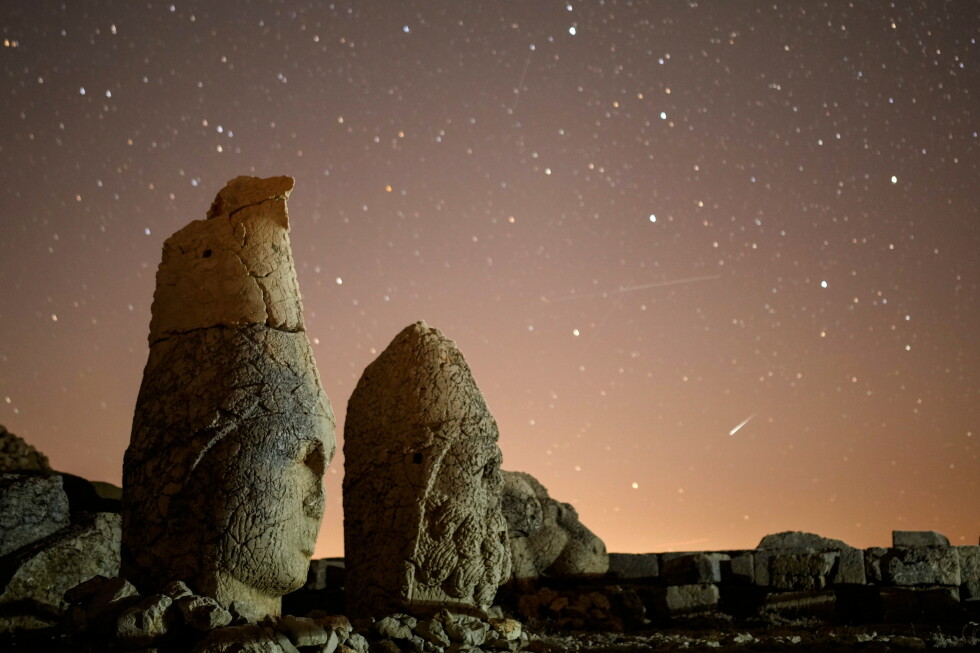
The highly anticipated Perseid meteor shower is set to captivate stargazers in the Northern Hemisphere, with ideal viewing conditions this year. The peak of the annual event falls on Wednesday night into Thursday morning, coinciding with a total solar eclipse across Spain, Iceland, and Greenland, as well as a six-planet parade. Under optimal circumstances, an estimated 50 to 100 meteors per hour may be visible, according to NASA. The American Meteor Society predicts 30 to 50 meteors per hour in rural areas. These celestial displays occur when Earth plows through trails of debris left behind by comets and asteroids, with the remnants colliding with Earth's atmosphere at high speeds, resulting in streaks of light known as shooting stars. The Perseids are fragments from comet 109P/Swift-Tuttle, an icy body that orbits the sun every 133 years and will not return until 2125. With summer temperatures making viewing comfortable and a new moon phase enhancing visibility, this year's Perseids promise to be a memorable experience for skywatchers. To catch the meteors, one should venture out after dark, away from clouds and urban lights. The best views will be between midnight and dawn when the constellation Perseus is high in the northern sky, with meteors seemingly radiating from this constellation. Astronomer Aparna Venkatesan of the University of San Francisco advises driving to the Sierra Nevada for optimal viewing. To maximize sightings, give your eyes about half an hour to adjust to the darkness and avoid looking at your phone. As astronomer Zach Vanderbosch from McDonald Observatory in Texas notes, "There's just something magical about it."
Filed underWorld
More stories
World
Ancestral Naga Skulls Returned to Nagaland by Oxford Museum for a Joint Memorial and Burial
— Global Focus Wire Desk
World
Stranded Round-the-World Cruise Ship Seized in Singapore after Operator's Financial Collapse
— Global Focus Wire Desk
World
US, Russia, and Ukraine Hold Talks in Abu Dhabi to End War in Ukraine
— Global Focus Wire Desk
World
European Diplomats Advocate for Involvement in Russia-Ukraine Negotiations at G7 Meeting
— Global Focus Wire Desk
World
Global Energy Tussle: US-China Rivalry and Its Impact on Household Bills Worldwide
— Global Focus Wire Desk
World
Honduran Court Delays Verdict in Sex-Trafficking Case Linked to Angie Pena's Disappearance
— Global Focus Wire Desk