Rare Early Copy of Declaration of Independence Unearthed by UK National Archives
Volunteer Michael Scurr, working at Britain's National Archives for over a decade, stumbled upon an extraordinary find last May.
By Global Focus Wire Desk
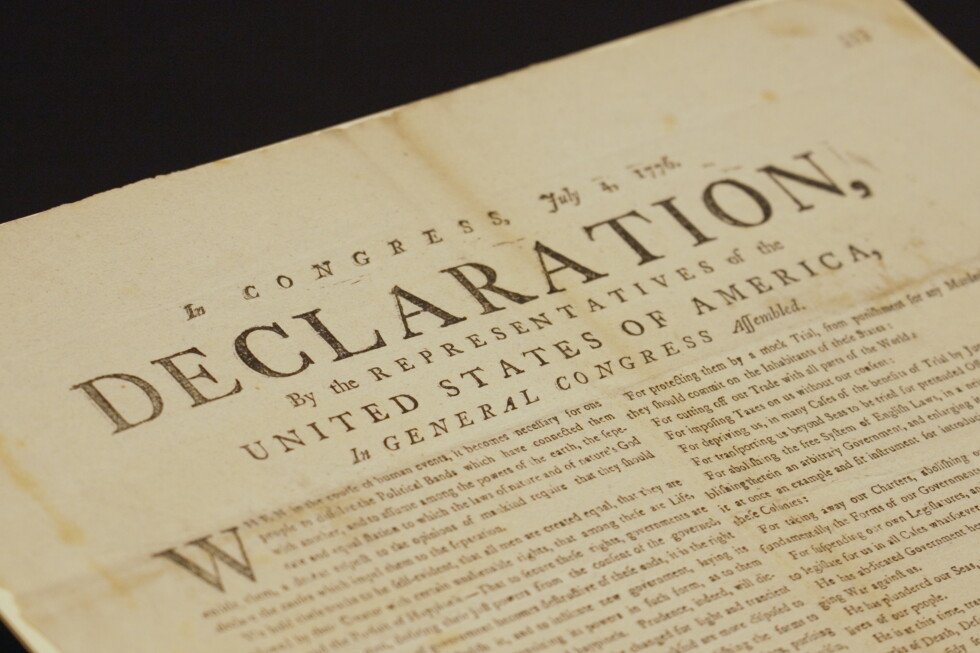
Volunteer Michael Scurr, working at Britain's National Archives for over a decade, stumbled upon an extraordinary find last May. While sifting through the correspondence of an 18th-century Royal Navy captain, he discovered a previously unidentified document titled "Declaration." Upon closer inspection, it was revealed to be a rare early copy of America's founding document, printed just days after its signing on July 4, 1776. This version, known as the Exeter printing, was printed in New Hampshire from July 16 to 19, 1776, and is one of only eleven original copies known to exist globally. The document was found attached to a report detailing the capture of the American privateer Dalton on Christmas Eve 1776. This discovery offers unique insight into the role of maritime forces during the American Revolution, as the Dalton served under the Continental Congress and was carrying news of American independence abroad. Amanda Bevan, head of the National Archives' project to catalog Royal Navy captains' correspondence, believes the Dalton's captain likely read out both his orders and the Declaration itself to his crew. As a privately owned vessel fighting under the auspices of the Continental Congress, the Dalton was a crucial component of the new nation's naval force. The discovery of this rare copy provides a tangible connection to the past, offering scholars a direct link to the captain who carried news of American independence to the world. The find also underscores the ongoing potential for historical discoveries even 250 years after the American Revolution.
Filed underWorld
More stories
World
Ancestral Naga Skulls Returned to Nagaland by Oxford Museum for a Joint Memorial and Burial
— Global Focus Wire Desk
World
Stranded Round-the-World Cruise Ship Seized in Singapore after Operator's Financial Collapse
— Global Focus Wire Desk
World
US, Russia, and Ukraine Hold Talks in Abu Dhabi to End War in Ukraine
— Global Focus Wire Desk
World
European Diplomats Advocate for Involvement in Russia-Ukraine Negotiations at G7 Meeting
— Global Focus Wire Desk
World
Global Energy Tussle: US-China Rivalry and Its Impact on Household Bills Worldwide
— Global Focus Wire Desk
World
Honduran Court Delays Verdict in Sex-Trafficking Case Linked to Angie Pena's Disappearance
— Global Focus Wire Desk