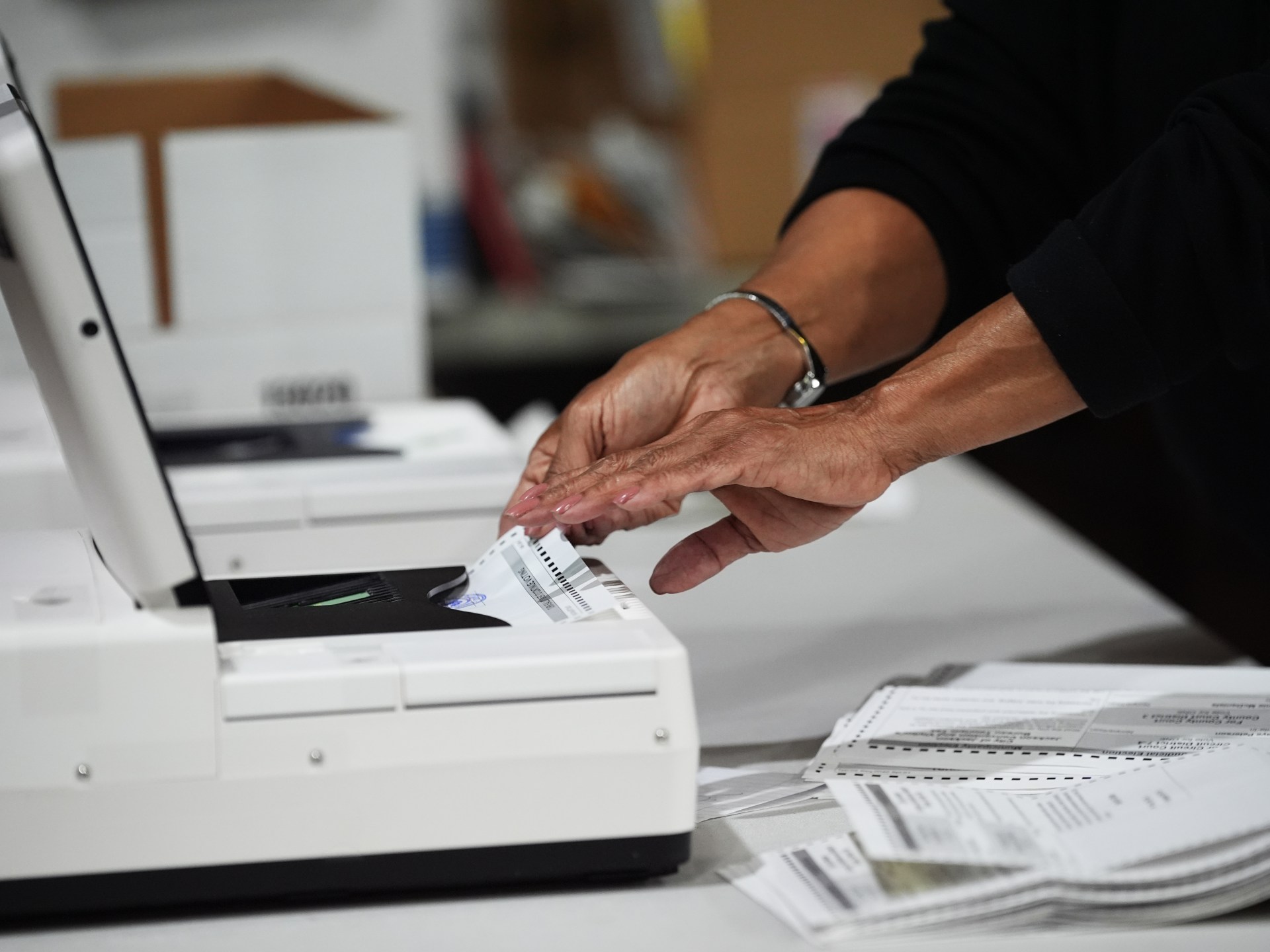
More than a week has passed since the United States midterm elections, yet the final outcomes for several congressional races remain undetermined. Democrats are hopeful that these undecided contests could further expand their majorities in both the House of Representatives and Senate when all votes are counted. As of Tuesday, Democrats had secured 54 seats in the incoming Senate, but they may gain one or two more as ballots are still being tallied in Alaska and Mississippi. In the House of Representatives, Democrats have already notched their largest elected majority since 2008 with 255 seats in the 435-member chamber, but there is potential for them to add to their lead as results from several races are pending.
In Mississippi, Democrat Scott Colom was leading Republican incumbent Cindy Hyde-Smith by around 2,600 votes in the race for the US Senate as of Tuesday. However, Mississippi does not have a central vote reporting system, and it is unclear exactly how many ballots are left to count. Mail-in absentee ballots must be received by Tuesday, and counties are required to submit their certified election results, including tallies of provisional ballots, to the state by Friday. Mississippi does not have automatic recounts or permit candidates to request a recount, but The Associated Press may declare a winner in a race that is eligible for a recount if it can determine the lead is too large for a recount or legal challenge to change the outcome.
In Alaska's US Senate race, Democrat Mary Peltola was leading Republican Senator Dan Sullivan by about 2,500 votes as of Tuesday, with an estimated 76 percent of the vote counted. Absentee ballots are still being counted, and the final absentee ballots mailed from outside the US can be accepted as late as November 18, which is 15 days after Election Day. Ranked-choice voting could also affect the timeline, as Peltola is just over one percentage point short of the majority needed to win outright. If neither candidate wins a majority, the race will proceed to ranked-choice tabulation on November 18. The state's “target date” for certifying the election results is November 25.
In North Carolina, four races remain undecided, and Republican incumbents are being challenged in each one. There are no automatic recounts in North Carolina, but candidates may request a recount if the margin between candidates is one percent or less of the total votes. The state must receive the recount request by noon Eastern Time on November 17, two business days after the county canvass in the state. The state is scheduled to certify its results on November 24. In California, only one of the remaining House races will affect the chamber's balance of power, and mail-in ballots must be received by Tuesday, with counties required to certify their results by December 3. The state will certify its results on December 11.
In South Carolina's 2nd District, a recount is ongoing in the race between Republican incumbent Joe Wilson and Democrat Zyon Khalifa, with Wilson leading Khalifa by only about 3,000 votes as of Tuesday when 99 percent of the votes had been counted. In Minnesota's 1st District, the race was still undecided late on Tuesday, with about 300 votes separating the top two candidates and an estimated 99 percent of votes counted. Recounts are not automatic in Minnesota, but a candidate can request a publicly funded recount if the margin between the winning and losing candidates is less than 0.25 percent of the vote. In Tennessee's 4th District, Democrat Victoria Broderick was trailing Republican incumbent Scott DesJarlais by around 300 votes as of Tuesday, with recounts held only as part of a legal challenge in that state.