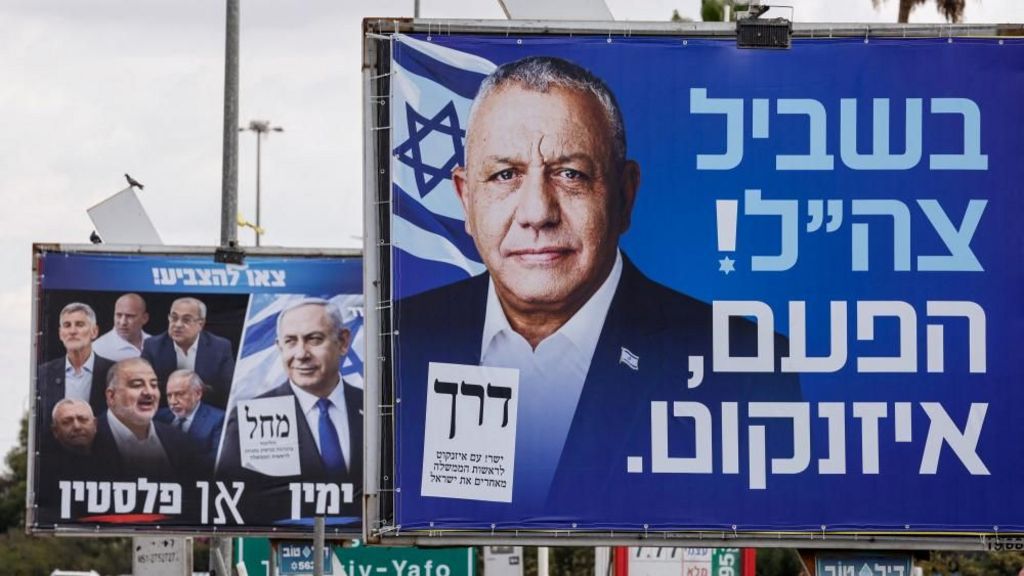
Israel's new parliament has been officially sworn in with opposition leader and former army chief Gadi Eisenkot taking the first step towards forming a government aimed at ousting caretaker Prime Minister Benjamin Netanyahu. President Isaac Herzog tasked Eisenkot with the formation of a government on Sunday, following his receipt of more recommendations from Knesset members than Netanyahu, although some parties within Eisenkot's bloc remain hesitant to govern together. The election held in October resulted in a hung parliament, leaving both Netanyahu and Eisenkot short of a majority in the 120-seat Knesset. Eisenkot has 28 days to build a coalition, with the possibility of a two-week extension. The new parliament composition includes several fresh faces and an unprecedented number of seats for Arab-led parties.
With the election considered as a referendum on Netanyahu, there is now a period of uncertainty regarding who will form the next government. Netanyahu will remain in office as caretaker prime minister until then, a process that could take from days to months. One of the most significant results was the performance of Israel's two Arab-led alliances - the United Arab List and the Joint List - which won an unprecedented 19 seats between them following a surge in turnout among Arab voters. The Arab parties could potentially hold the balance of power, although Netanyahu has ruled out governing with them, and three of the parties in Eisenkot's bloc have opposed their inclusion in a coalition.
Eisenkot called for the formation of a "national emergency government" at the president's residence on Sunday, emphasizing the need for political parties to put aside ideological differences in order to remove Netanyahu from office. He outlined four principles for potential coalition partners: recognition of Israel as a Jewish and democratic state, acceptance of the values of the Declaration of Independence, backing mandatory military, national or civilian service for all, including currently exempt communities, and recognizing Hamas as a terrorist organization and committing to dismantling its military and governing capabilities. However, these principles could pose significant challenges for Eisenkot's potential partners, particularly in relation to conscription and recognition of Hamas.