Federal Control Over D.C. Extended as National Guard Deployment Continues Through 2029
In a move that has sparked controversy, the United States government has extended the deployment of the National Guard in Washington D.C., with troops expected to remain until January 2029.
By Global Focus Wire Desk
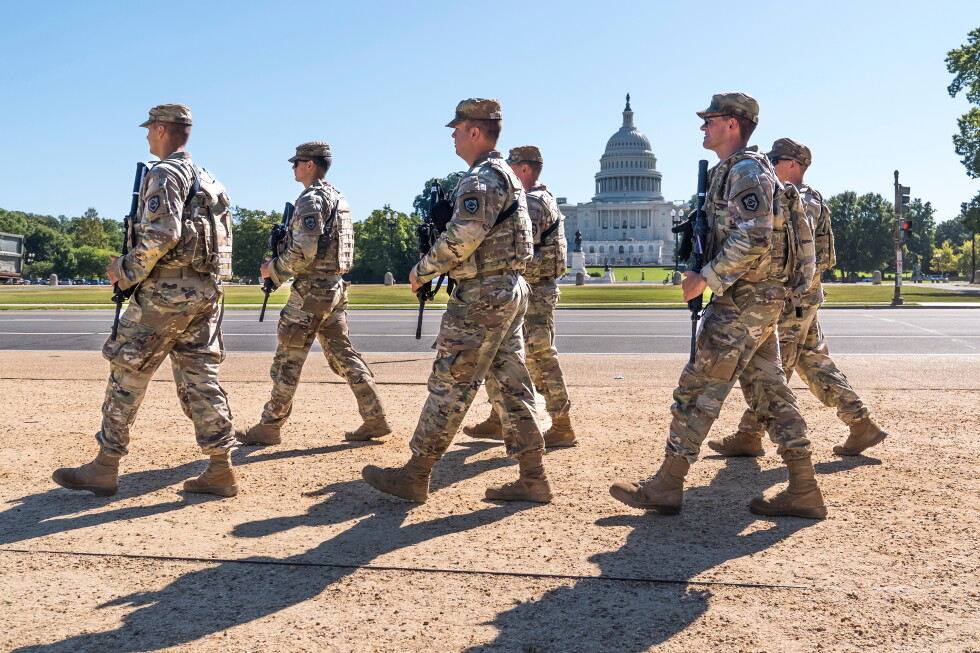
In a move that has sparked controversy, the United States government has extended the deployment of the National Guard in Washington D.C., with troops expected to remain until January 2029. Critics argue this move infringes upon the city's autonomy, particularly as it is a heavily Democratic area. The continued presence of military personnel, initially deployed under the pretext of a crime emergency, raises questions about their necessity in the nation's capital, with some residents viewing it as an attempt to create a police state. This development presents a significant challenge for political candidates expected to take office after the midterm elections, who will be tasked with pushing back against President Trump's encroachment into local affairs. The deployment, announced in August 2025, has seen over 4,600 military personnel from various states and territories join local forces. While some residents appreciate the support provided during medical emergencies, snow removal, and beautification projects, others express concern about the financial burden, estimated to be approximately $1.4 billion, and the impact on the city's sense of normalcy and autonomy. The debate over the effectiveness of this law enforcement surge in reducing crime persists, with some attributing the drop in crime rates to local efforts over several years, rather than Trump's mission. Despite legal challenges and public dissent, the future of this deployment remains uncertain, leaving residents feeling demoralized and without a clear avenue for resistance. Washington D.C.'s unique status as a congressionally established federal district gives President Trump significant influence over local law enforcement and the D.C. National Guard, making it easier for him to exert control despite opposition from local leaders.
Filed underWorld
More stories
World
Ancestral Naga Skulls Returned to Nagaland by Oxford Museum for a Joint Memorial and Burial
— Global Focus Wire Desk
World
Stranded Round-the-World Cruise Ship Seized in Singapore after Operator's Financial Collapse
— Global Focus Wire Desk
World
US, Russia, and Ukraine Hold Talks in Abu Dhabi to End War in Ukraine
— Global Focus Wire Desk
World
European Diplomats Advocate for Involvement in Russia-Ukraine Negotiations at G7 Meeting
— Global Focus Wire Desk
World
Global Energy Tussle: US-China Rivalry and Its Impact on Household Bills Worldwide
— Global Focus Wire Desk
World
Honduran Court Delays Verdict in Sex-Trafficking Case Linked to Angie Pena's Disappearance
— Global Focus Wire Desk