European Leaders Rally Around Meloni Amid Trump's Criticism, Strengthening United Front
In a surprising turn of events, U.S. President Donald Trump's criticisms of Italian Prime Minister Giorgia Meloni have led to an unforeseen consequence - a strengthening of Europe's unity.
By Global Focus Wire Desk
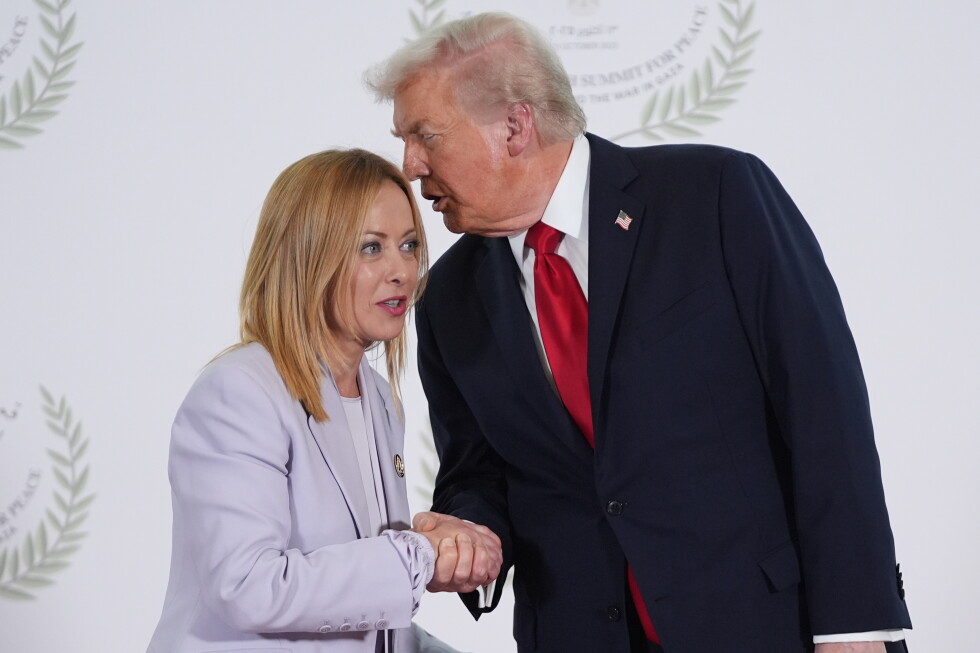
In a surprising turn of events, U.S. President Donald Trump's criticisms of Italian Prime Minister Giorgia Meloni have led to an unforeseen consequence - a strengthening of Europe's unity. Following Trump's claims that Meloni had groveled for his attention and questioned Italy's reliability as a wartime ally, European leaders have rallied in support of the Italian premier, thawing a previously frosty relationship due to her hard-right political roots. This newfound unity among European leaders is seen as a response to ongoing foreign policy challenges, including wars in Ukraine and Iran, a trade deficit with China, and threats from Russia. As a result, Trump, who often prefers individual negotiations with European countries, finds himself with reduced negotiating power, according to analysts. The upcoming NATO summit in Turkey next week could test this new European unity, as Meloni's disputes with Trump have helped strengthen her ties with leaders once wary of her party's post-fascist roots. Key moments include Meloni's refusal to allow U.S. bombers to use a base in Sicily without parliamentary approval and her rejection of a proposal by Britain and France to send European troops to Ukraine following a possible ceasefire. This newfound solidarity among European leaders could be a game-changer, particularly as elections approach, with more focus shifting towards domestic issues. Beyond the European Union, this dynamic is playing out in various regions, from the Arctic Ocean to the Balkans, as leaders across political spectrums react to Trump's policies and actions. The political risks of close alignment with Trump were evident in Hungary, where Prime Minister Viktor Orbán - long regarded as Trump's closest ally in the EU - was voted out of office despite support from the U.S. president and prominent figures in the MAGA movement. Despite her close alignment with Trump on issues like immigration and security, Meloni has diverged from him on Ukraine, a stance that has made her more palatable for European leaders and played a key role in forging a more united European front towards the U.S.
Filed underWorld
More stories
World
Ancestral Naga Skulls Returned to Nagaland by Oxford Museum for a Joint Memorial and Burial
— Global Focus Wire Desk
World
Stranded Round-the-World Cruise Ship Seized in Singapore after Operator's Financial Collapse
— Global Focus Wire Desk
World
US, Russia, and Ukraine Hold Talks in Abu Dhabi to End War in Ukraine
— Global Focus Wire Desk
World
European Diplomats Advocate for Involvement in Russia-Ukraine Negotiations at G7 Meeting
— Global Focus Wire Desk
World
Global Energy Tussle: US-China Rivalry and Its Impact on Household Bills Worldwide
— Global Focus Wire Desk
World
Honduran Court Delays Verdict in Sex-Trafficking Case Linked to Angie Pena's Disappearance
— Global Focus Wire Desk