Deadly Nepal Flash Flood Leaves 22 Dead, Hundreds Missing; China Reports Mudslide Casualties in Gyirong County
A devastating flash flood swept through villages in Nepal's Rasuwa district on Wednesday, resulting in at least 22 fatalities and the disappearance of hundreds more, including tourists from multiple…
By Global Focus Wire Desk
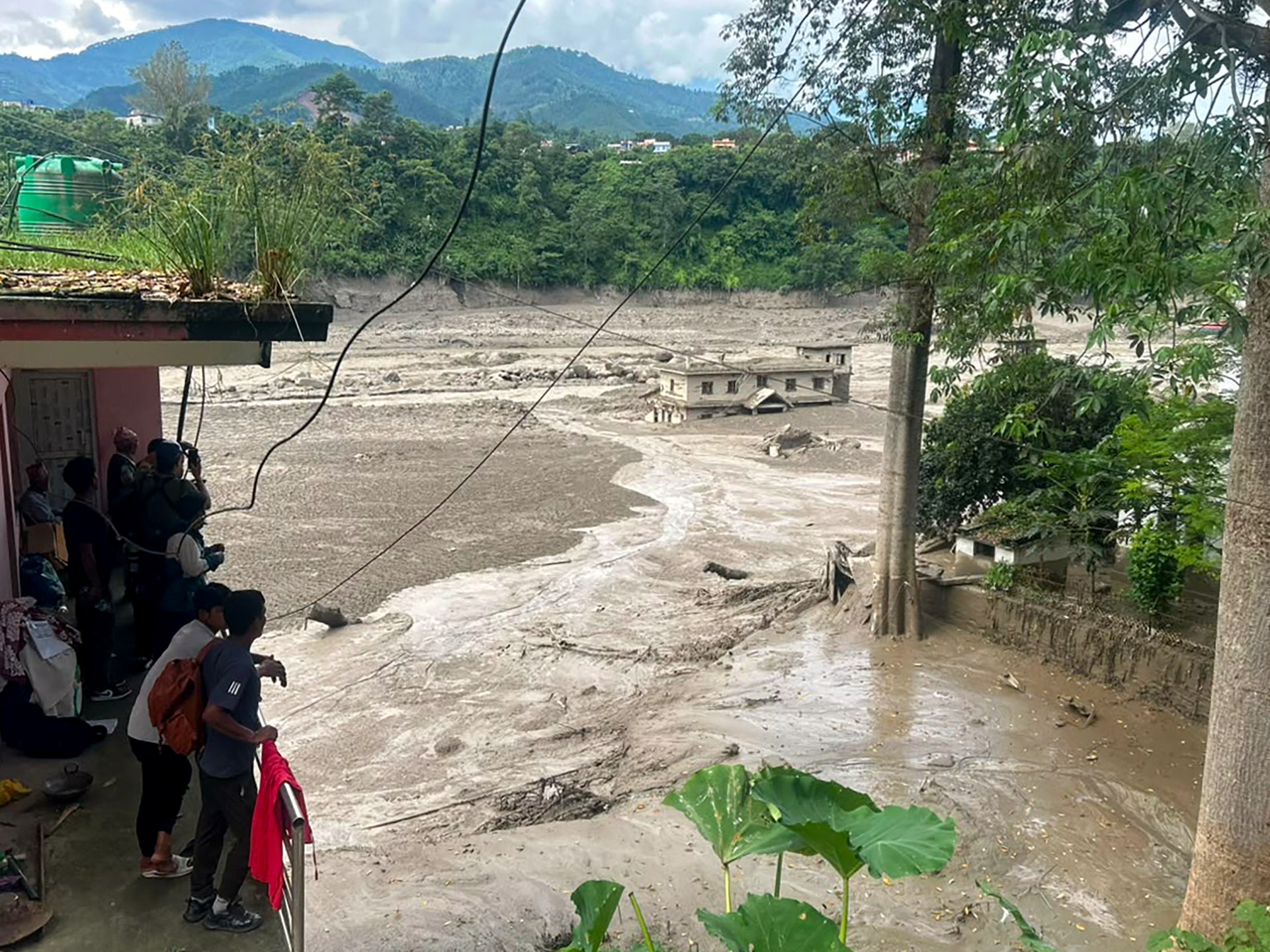
A devastating flash flood swept through villages in Nepal's Rasuwa district on Wednesday, resulting in at least 22 fatalities and the disappearance of hundreds more, including tourists from multiple countries. The deluge destroyed roads, bridges, and power projects in the region bordering Tibet, with officials warning of potential heavy casualties or property loss. Narendra Pariyar, district administrator, urged residents to seek higher ground due to reports of nearby villages and infrastructure project sites being washed away. Across the border in Gyirong County, China reported significant casualties following a mudslide that hit a land crossing between China and Nepal, disrupting communication, power, and transportation in the Shigatse region. Chinese President Xi Jinping urged immediate search efforts for the missing and called for enhanced monitoring and early warning systems to prevent secondary disasters. In Nepal, Prime Minister Balendra Shah convened an emergency meeting of the National Disaster Risk Reduction and Management Authority to assess the situation. The Nepal Army has deployed helicopters and disaster response personnel to the affected area, while the Nepal Electricity Authority reported damage to over 430 megawatts of production capacity from hydropower and solar facilities. Meanwhile, eight South Korean workers on a hydropower plant project in Nepal remain missing, with ten others stranded. South Korea is planning to send a joint rapid-response team to Nepal led by the foreign minister as soon as possible. The exact cause of the flood remains unclear; however, climate experts suggest an avalanche from a glacier likely triggered the flooding in the Lhende Khola River, a tributary of the Bhote Koshi River, which originates in Tibet and empties into Nepal's Trishuli River. The flood in 2021, also caused by an avalanche from a glacier, had killed nine people with 24 missing, causing disruptions to transport and trade for several months.
Filed underWorld
More stories
World
Ancestral Naga Skulls Returned to Nagaland by Oxford Museum for a Joint Memorial and Burial
— Global Focus Wire Desk
World
Stranded Round-the-World Cruise Ship Seized in Singapore after Operator's Financial Collapse
— Global Focus Wire Desk
World
US, Russia, and Ukraine Hold Talks in Abu Dhabi to End War in Ukraine
— Global Focus Wire Desk
World
European Diplomats Advocate for Involvement in Russia-Ukraine Negotiations at G7 Meeting
— Global Focus Wire Desk
World
Global Energy Tussle: US-China Rivalry and Its Impact on Household Bills Worldwide
— Global Focus Wire Desk
World
Honduran Court Delays Verdict in Sex-Trafficking Case Linked to Angie Pena's Disappearance
— Global Focus Wire Desk