Controversial Red Card Shadows US World Cup Victory Over Bosnia-Herzegovina
In a nail-biting match, the United States secured a 2-0 victory over Bosnia-Herzegovina in the World Cup.
By Global Focus Wire Desk
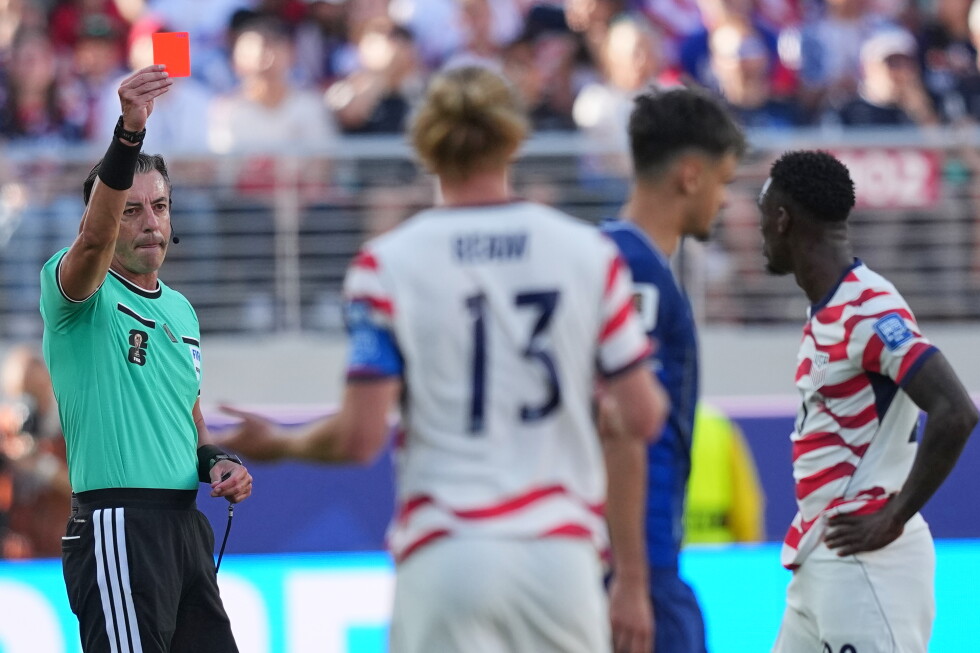
In a nail-biting match, the United States secured a 2-0 victory over Bosnia-Herzegovina in the World Cup. However, the triumph was overshadowed by a contentious red card issued to star striker Folarin Balogun during the second half. The penalty, upheld after a video replay review, has sparked debate over its fairness and parity with other penalties, particularly those avoided by players like Argentina's Lionel Messi. Red cards, a severe form of punishment, eject a player from the game, prevent replacements, and impose a suspension for the subsequent match. Invented after the 1966 World Cup, these cards are issued based on the referee's discretion in the heat of play. Balogun's red card has been questioned for its intentionality, with U.S. coach Mauricio Pochettino asserting it was an ordinary football action. The referee's challenge lies in monitoring all actions, and FIFA's introduction of Video Assisted Review (VAR) aims to mitigate such oversights. However, the slow-motion replay review led to Balogun's red card, igniting another debate on its intentionality. Balogun will miss the match against Belgium but may return for the quarterfinals if the U.S. advances. Controversies surrounding top players, such as Messi, have been a recurring theme in this tournament. In Argentina's first game, Messi's studs-up challenge from behind went unpunished despite leaving Algeria defender Aissa Mandi injured. This incident has fueled discussions about inconsistencies in card issuances and the perceived leniency towards star players.
Filed underWorld
More stories
World
Ancestral Naga Skulls Returned to Nagaland by Oxford Museum for a Joint Memorial and Burial
— Global Focus Wire Desk
World
Stranded Round-the-World Cruise Ship Seized in Singapore after Operator's Financial Collapse
— Global Focus Wire Desk
World
US, Russia, and Ukraine Hold Talks in Abu Dhabi to End War in Ukraine
— Global Focus Wire Desk
World
European Diplomats Advocate for Involvement in Russia-Ukraine Negotiations at G7 Meeting
— Global Focus Wire Desk
World
Global Energy Tussle: US-China Rivalry and Its Impact on Household Bills Worldwide
— Global Focus Wire Desk
World
Honduran Court Delays Verdict in Sex-Trafficking Case Linked to Angie Pena's Disappearance
— Global Focus Wire Desk